


Applies to most traditional retail, really. Link.
-
Flight training journal for September 25
The pace of training is increasing to about two flights per week, faster than my ability to blog each flight. Tonight I conducted five touch-and-gos at Austin Bergstrom. Remaining in the pattern at Austin is slightly more perplexing than the usual flights we take to smaller, more rural fields like Lockhart. Winds this afternoon were 15-25 knots, presenting strong cross winds that were compounded by heavy thermals over paved areas and highways around the airport. Traffic wasn’t especially heavy, but we were regularly position between MD-80s and 737s as early evening arrivals picked up around 5pm.
-
Details of Amazon’s Kindle Tablet
 Just before the Labor Day weekend, TechCrunch’s MG Siegler went hands-on with a prototype of the upcoming Amazon Kindle tablet. Siegler writes that the color tablet will feature a deeply branded reboot of the Android OS. Amazon is eyeing a November release, according to the report.
Again, the device is a 7-inch tablet with a capacitive touch screen. It is multi-touch, but from what I saw, I believe the reports that it relies on a two-finger multi-touch (instead of 10-finger, like the iPad uses) are accurate. This will be the first Kindle with a full-color screen. And yes, it is back-lit. There is no e-ink to be found anywhere on this device.
I’m a huge fan of the Kindle for two reasons. The first being that it’s neatly tied to Amazon, allowing me to purchase content and send it directly to the device, or access it through my iPhone or through the new Web-based reader. Second, e-Ink is incredibly readable; It’s far more easy to read for extended lengths than my iPad’s screen. It will be a shame if the Kindle Tablet doesn’t retain that level of readability. Expect leaked images of the prototypes screen at any time.
-
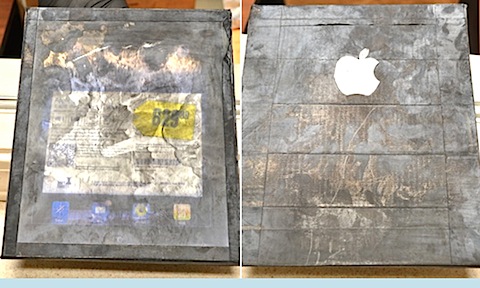
Woman scammed by wooden iPad salesmen
Via The Smoking Gun:
Ashley McDowell, 22, told deputies that she was approached by two black males who claimed to have purchased iPads in bulk and were selling them for $300 apiece. After McDowell explained that she only had $180, the duo agreed to sell her the device at a cut rate. But when McDowell drove home and opened the FedEx box containing the iPad, she instead discovered the wood with the Apple logo. The “screen”–which was framed with black tape–included replicas of iPad icons for Safari, mail, photos, and an iPod.
-
Call Tim, to see how his day is going
Screenshot of Steve Jobs’ calendar. Heartwarming.
-
Celebrating 102
I’m a huge fan of my wife’s grandmother, who earlier this year turned 102. Fanny May Bruce was born in 1909, and she has lived a terrific life. She’s truly a witness to history. I was excited to setup a website in her honor that features clips and videos representing just a tiny part of her life as it was covered by several West Texas newspapers over the past year or two.
via Fanny May Bruce’s life blog:
[Fanny May Bruce] has enjoyed working with her hands. If she needed a piece of furniture to fit in a certain space in her home, she built it. Fanny May’s home is filled with many beautiful hand crafted pieces of furniture. In addition to the woodworking, she is an accomplished artist. When asked what her favorite color to use in her art work, she replied, “Whatever needs to be there.” One learns that this is a lady that doesn’t waste time with idle chat or thoughts.
More: FannyMayBruce.com

 Michael Castellon