



-
The Past on Our Plates
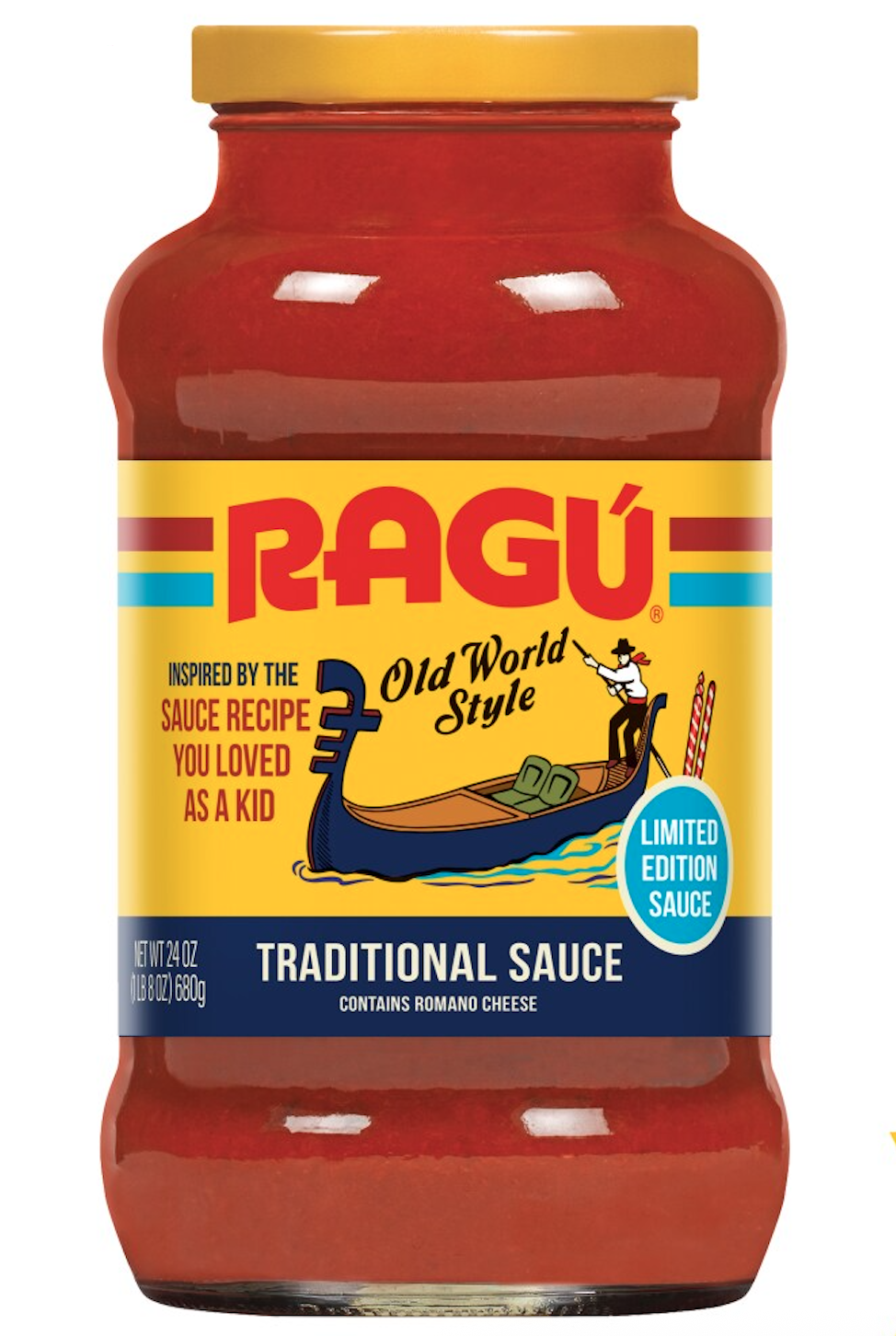
We live in a forward-facing world. Technology promises acceleration. Medicine promises longevity. Industries compete to predict the next desire even before we can name it. We are coached to fixate on what comes next. And yet, amid our relentless futurism, food remains oddly rooted in the past.
Here in Austin and around the world, farmers markets and grocery stores have a distinct vocabulary: rustic, heirloom, heritage, handcrafted, old-world.
The typography evokes old-world aesthetics. The packaging calls to mind a grandmother’s pantry or a pre-industrial kitchen. Even mass-produced items are dressed in artisanship and ancestral wisdom. This is not the sleek, metallic aesthetic of the future. It is the aesthetic of memory.
Restaurants, especially in trend-conscious cities like Austin, will do just about anything to feel older than they are. A hip brunch spot opens in a defunct laundromat, all faded signage and ironic detergent boxes. Another serves craft cocktails in a former schoolhouse, with drinks named things like “Trapper Keeper” and “Chemistry” … more yearbook kitsch than history lesson. The message is clear: authenticity can be manufactured, and nothing says “trust us” like pretending your restaurant has always been there, just waiting for its moment to gentrify.
Why does food resist the forward thrust of culture? Why do we want it to?
Food carries an emotional weight that other products do not. We often eat to remember. A dish prepared a certain way becomes a mnemonic device. It transports us to another room, another table, another time. And marketers understand this. They promise not just flavor, but familiarity. When a cereal brand revives a vintage box design, or a pasta sauce boasts a recipe unchanged for nearly a century, it is not merely marketing a product. They are selling us a portal to another time.
In tech, the past is something to be escaped. There, the old is synonymous with the obsolete. Newness is a currency, and anything that lingers too long risks being disrupted. In food, however, the old often means the trusted. It suggests origins, integrity, and a time before processing and preservatives, before supply chains grew invisible and flavor was engineered.
This hints at a cultural tension between control and surrender. Much of modern life, and marketing, is designed to minimize uncertainty. Algorithms curate our preferences. Interfaces eliminate friction. But food remains messy. It resists full abstraction. To grow it, to cook it, even to taste it requires contact with the uncontrollabl e— weather, biology, hunger, and mood. The invocation of the past in food marketing is a way of making peace with this uncertainty.
This longing, of course, is often commercialized to the point of parody. The phrase “small batch” has appeared on mass-market ice cream. “Artisanal” has been applied to mayonnaise.
Even the past can be pretentious. Yet even through the exaggeration, the instinct is revealing. We do not simply want efficiency. We want meaning. And food, more than almost any other commodity, carries the burden of supplying it.
In the end, the rustic label or the heritage font is not a rejection of progress. It is a reminder that not all progress looks forward. Sometimes it looks back. And sometimes, if only for the length of a meal, it allows us to dwell in a version of the world where things felt more whole.
-
Glengarry Glen Government: The Perils of Governing Like a Campaign

A recurrent pattern in public administration is the appointment of campaign communication staff to key agency roles following an electoral victory. These individuals, skilled in messaging, rapid response and public engagement, often struggle to transition from the fast-paced, reactive nature of campaigns to the structured, process-driven world of governance.
Effective policymaking requires excruciating planning and negotiation, regulatory compliance and long-term focus — elements often at odds with campaign-style urgency. As a result, many former campaign staff leave their agency appointments within a short period, frustrated by bureaucratic constraints and the realization that governance requires sustained institutional processes and expertise rather than continuous political mobilization and the arbitrary boosting of KPIs.
The modern media environment, fueled by 24-hour news cycles and rapid digital dissemination, pressures agencies to produce frequent, high-profile announcements that often serve little purpose beyond inflating internal performance metrics. This environment tempts new political staff to prioritize visibility over substance, mistaking media saturation for governance.
Newly appointed political staff often enter agencies with misplaced confidence, assuming their campaign-honed aggressiveness will translate to effective leadership. They speak in platitudes and war metaphors.
This dynamic mirrors Alec Baldwin’s infamous scene in the 1992 film adaptation of David Mamet’s Pulitzer-winning play Glengarry Glen Ross. Baldwin’s character, Blake, delivers a ruthless, high-pressure monologue to struggling salesmen, intending to motivate them but instead fueling resentment and desperation. Likewise, incoming political staff who mistake dominance for leadership quickly alienate career professionals and find themselves overwhelmed by the complexities of governance.
Blake is, as one of my former mentors in Texas state government would say, all hat and no cattle. Ten pounds of bullshit in a five-pound bag.
When Policy Becomes Political Messaging
This misalignment between politics and governance has contributed to an increasing reliance on executive orders and policy directives as political communication tools. Rather than serving as well-planned instruments of governance, these actions are wielded for short-term political impact, treating policymaking as a series of symbolic gestures rather than a structured, outcomes-driven enterprise. While executive authority is a legitimate mechanism for enacting policy, its overuse weakens administrative effectiveness, contributing to policy instability and undermining public trust.
Governance should be strategic, deliberate and grounded in empirical analysis. When policy decisions prioritize social media impact over operational effectiveness, they risk short-termism, undermining institutional credibility and creating policy instability. Rushed decisions often lack rigorous planning, leading to inefficiencies and legal challenges. Politically driven shifts erode public trust and make agencies appear partisan. Furthermore, reliance on executive actions fosters policy reversibility, hindering long-term progress. To maintain credibility and effectiveness, governance must prioritize thoughtful, durable policymaking over fleeting public appeal.
Prioritizing Policy Over Performance Metrics
Government exists to serve citizens, not campaigns. While political leaders should always seek to communicate their priorities, effective governance requires stability, procedural integrity and a focus on results.
By prioritizing substantive policymaking over spectacle, government agencies can preserve public trust and promote durable, meaningful progress — ensuring that today’s decisions have a lasting impact beyond the next news cycle.
-
After the election, the antidote to uncertainty isn’t more scrolling — it’s doing
Feeling overwhelmed by the weight of tomorrow? You’re not alone.
Like many people this month, I’ve been caught in a spiral of news feeds and hours-long discussions about what might happen next. I keep coming back to lessons from an unexpected place: the airplane.
Early in our training, pilots learn a critical lesson about handling engine failures: when the unthinkable happens, take a deep breath. Then, methodically work your emergency checklist.
It’s a pivotal moment in training. That sudden silence when your instructor pulls back the throttle and calmly says “your engine just quit.” In those first jarring seconds, every student pilot experiences their journey through the stages of grief— denial (“this can’t be happening”), anger (“why now?”), bargaining (“maybe if I just adjust this…”), depression (“I’m not cut out for this”), and finally, acceptance.
By the time they’ve earned their license, most pilots have been through dozens of simulated emergencies to the point muscle memory creates action at the first sign of a problem.
The most successful pilots aren’t the ones who never face emergencies — they’re the ones who transform panic into procedure.
When we channel our energy into tangible actions, something remarkable happens. Those swirling thoughts about the future begin to settle. Our sense of agency returns. Whether it’s volunteering at a local nonprofit, joining a community board, or simply helping a neighbor, each small step forward creates ripples of real change.
I remember the quote, “The best time to plant a tree was 20 years ago. The second best time is now.” The same applies to civic engagement. We don’t need to wait for perfect conditions or clear forecasts to make a difference. It’s precisely during uncertain times that our communities need us most.
Here are three ways I’ve found to transform concern into concrete impact:
1. Start hyperlocal: What’s happening on your street? In your neighborhood? Sometimes the most meaningful change begins with a conversation across the fence.
2. Choose one issue you deeply care about and dive in deep. It’s better to make significant progress in one area than to spread yourself too thin across many.
3. Build bridges, not bunkers. Some of my most productive collaborations have come from working with people who see things differently than I do.
The beauty of action is that it’s contagious. When you begin moving forward, others notice. They join in. Suddenly, what started as one person’s effort to manage their uncertainty becomes a collective force for positive change.
Remember: while we can’t control every headline or predict every outcome, we can always choose how we respond. Every time you feel that knot in your stomach about what’s ahead, let it be your cue to ask, “What can I do right now?”
Because here’s the truth: the future isn’t something that happens to us. It’s something we build, day by day, choice by choice, action by action.
What step will you take today?
-
Bruce Bastian, WordPerfect Co-Creator, Dies At 76
When Alan Ashton was a computer-science professor at Brigham Young University in the mid-1970s, the director of the school’s marching band knocked on his door and said he wanted to use a computer to choreograph the band’s halftime shows. Ashton was easily persuaded; he was a trumpet player whose Ph.D. dissertation at the University of Utah was “Electronics, music and computers.” Bruce Bastian, the graduate student who was working as BYU’s marching-band director, turned out to be a quick learner. “He was very conscientious, very thorough,” Ashton said in an interview, “and just absolutely brilliant.” Within a few years, the two were at work on a program that would turn them into two of the richest people in the nation, founders of the company that made WordPerfect, the dominant word-processing software in the 1980s and early ’90s and one of the first pieces of software many Americans bought when they brought home their first PCs.
But behind the hundreds of millions of dollars and blockbuster success, Bastian’s personal life, he later said, was in “free fall.” Between the time he and Ashton released what would later be known as WordPerfect to the public in 1980 and when they sold the company for $1.4 billion in 1994, Bastian told his wife, four sons and his Mormon community that he was gay and leaving both his marriage and the church. When he died, June 16, at the age of 76 from complications associated with pulmonary fibrosis, he had been living a different life: A longtime advocate for LGBTQ rights, Bastian was married to a man, and had found a way to maintain relationships with his family, who remained dedicated members of the church that rejected his sexual orientation. “I kind of have three parts of my life,” he said in 2010 during one of several extensive interviews he gave to the Mormon Stories podcast, “the pre-WordPerfect life, the WordPerfect years, and now the LGBT years.”



 Michael Castellon