• Still One of My All Time Favorite Moments

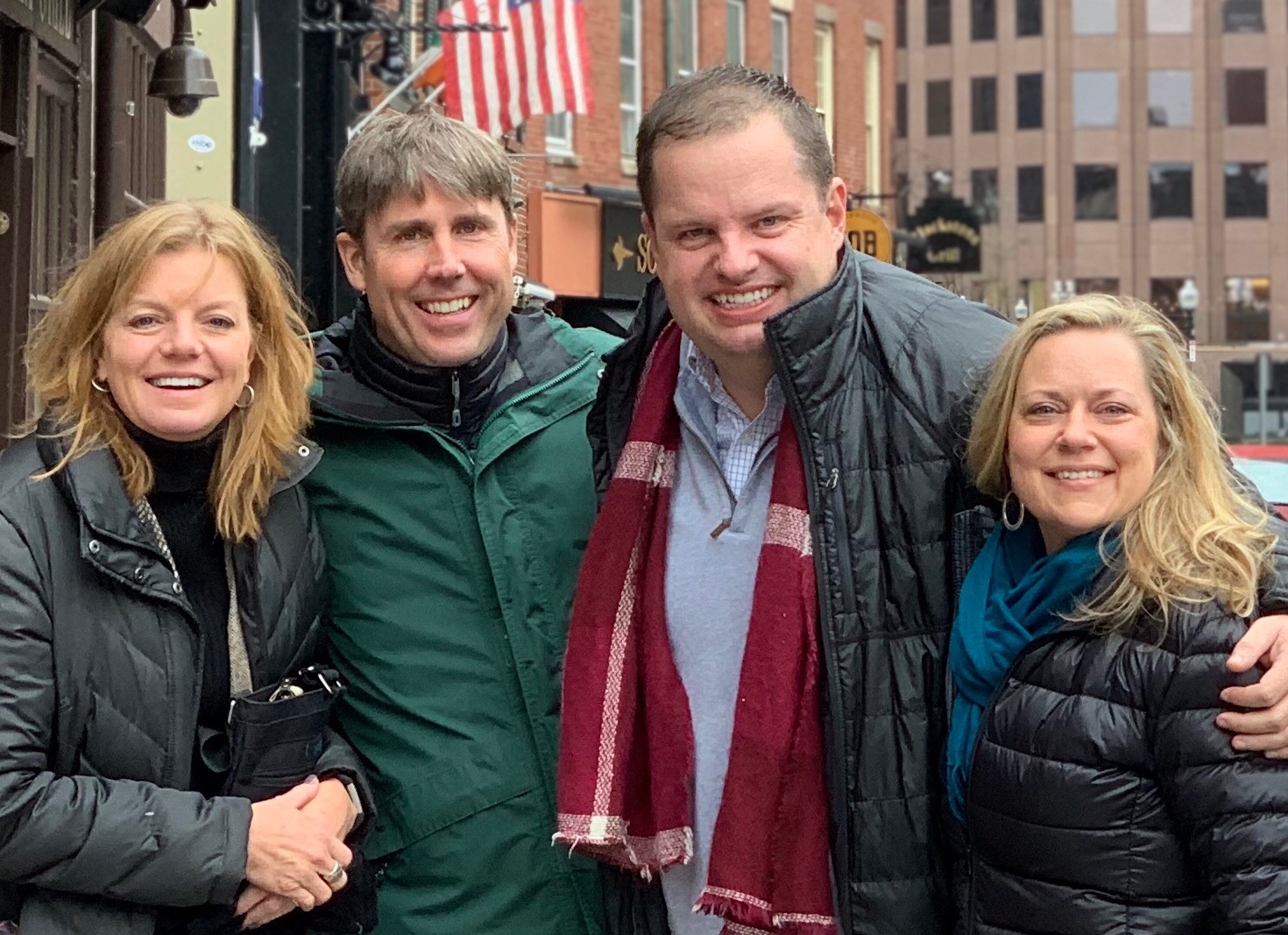
    Throwback Thursday: 

    The highway’s jammed with broken heroes on a last chance power drive.

    Michael Castellon, Bruce Springsteen
  • Leaving Facebook

    Earlier this month I deactivated my Facebook and Twitter accounts. There are both personal and global reasons for my decision, and I don’t have anything particularly interesting to say on the topic other than I don’t miss those services and you can no longer find me there. This space will continue to be my online home, as it has been since 2005. I hope you’ll come see me. 

  • Instrument Training Update

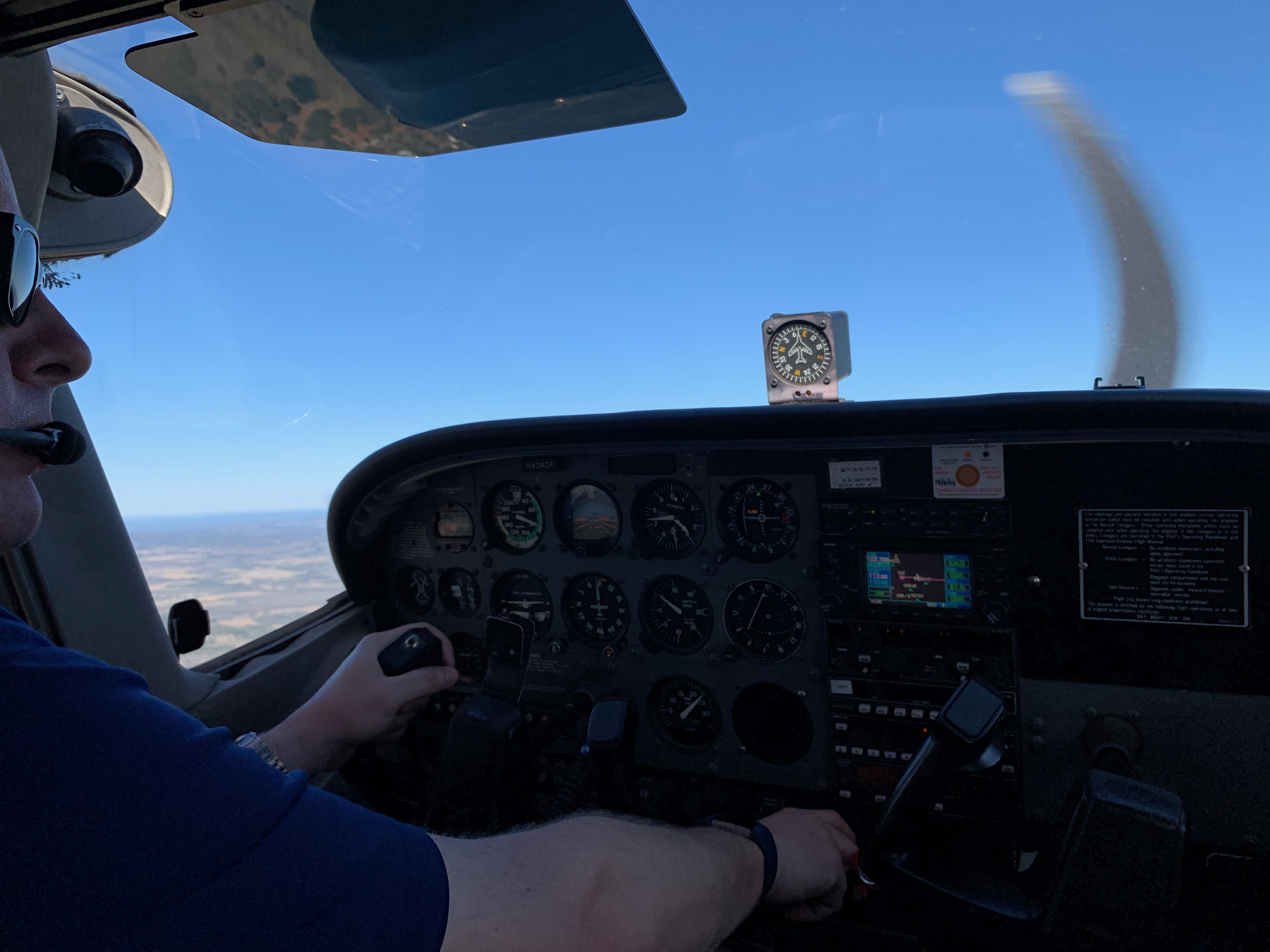
    IMG_0475
    I’m continuing to work toward my instrument rating. I’m learning that there is much more to this rating than flying in challenging weather conditions. The rating is about developing discipline, precision and workload management. The little things matter: How you test and tune nav and comm radios, how you organize in-fight documents and how you determine the airworthiness of both your aircraft and navaids along a given route. The training puts a premium on minimizing mental and emotional bandwidth, both of which are precious commodities when flying through more demanding conditions. Eyes and other senses must also be disciplined and trained so as not to misinterpret flight dynamics and control changes. Even language becomes more precise: VORs don’t broadcast a signal, they emanate a signal. My instructor is disciplined and expects the same.  Training consists of ground study, simulator work and flying. I find that talking about concepts, applying those concepts in a simulator and then in actual flight provides a productive framework for deeper learning.

  • Harvard vs. Yale 2018

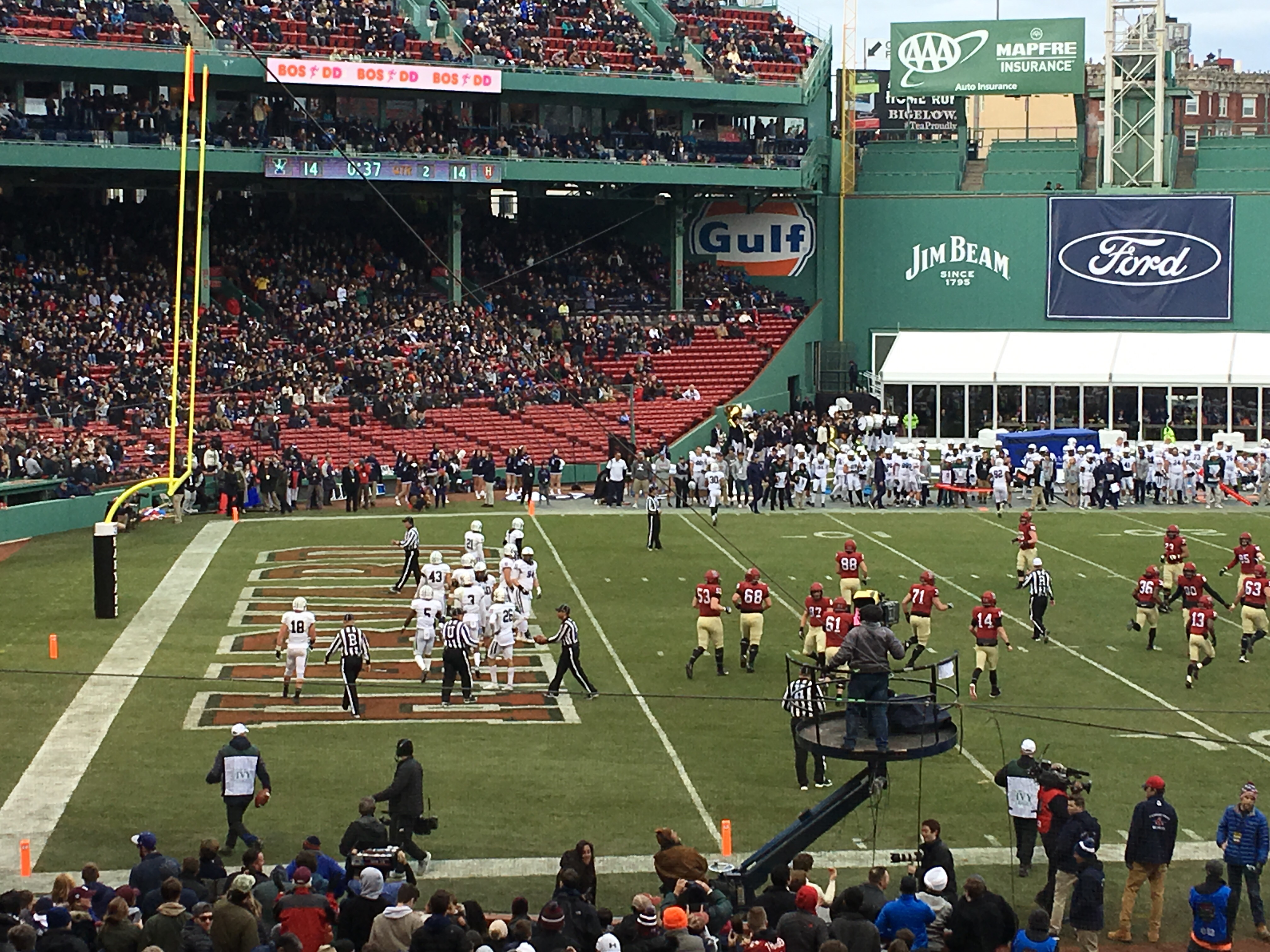
    It’s cold in Boston. We spent the weekend with my sister and brother-in-law visiting my niece at Cambridge. This year’s Harvard vs. Yale football game was held at Fenway Park. My first time there. I regret not getting a picture of the clam chowder vendors walking the stands. Harvard 45, Yale 27.

  • This Must Be The Place

    I recently visited my hometown of Champaign-Urbana, Illinois. I haven’t been back nearly enough. Some things haven’t changed. Other things have changed a lot. I got to spend time with a few people who were deeply influential to me while growing up. I took Lauren to see some of my childhood homes, and we saw a Lyle Lovett show at the Virginia Theater. Incidentally, we ran into Lovett at the Austin Airport while leaving for Champaign. He spoke with us for a few moments and seemed as stunned as we were that we were all on our way to the same show. Everything you’ve ever heard about him is true.

    I made a point to rent an airplane and go flying. Urbana’s Frasca Field is where my dad bought me a plane ride when I was nine or ten years old. It was a cosmic experience for me. I got checked out in a Cessna 172 at Central Illinois Aviation, and the next day took Lauren for an aerial tour of the area. We went out over endless miles of corn and soybean, then turned in and did an aerial tour of the campus and cities.

    Later, we took in the University of Illinois homecoming game against Purdue. We walked through West Side Park on several evenings, and I caught myself missing this place.

    Photos

    Champaign-Urbana 2018//embedr.flickr.com/assets/client-code.js

  • Instrument Training Lesson 1

    flight simulator IFRThis weekend I started training toward my instrument rating. My flight instructor is a great teacher and will be a good fit. After about an hour of ground instruction, we logged 1.8 hours in the flight simulator. We did basic attitude instrument flying in the clouds and shot an instrument approach through the rain.

  • Hot and Fast Smoked Texas Brisket


    It doesn’t take 20 hours to produce a high quality smoked brisket. I’ve been refining a method to produce great Texas-style smoked brisket in about 5 to 7 hours. This method reduces cooking time by increasing cooking temperature from 250 degrees to about 500 degrees.

    I’ve been working on this method for more than three years, ever since a friend gave me an old smoker a woman in his neighborhood had left on the curb in front of her house. I’ll often smoke a brisket on weekends when the weather makes it difficult to fly or work outdoors.

    I’ve smoked at least a three dozen briskets over the last three years. I’ve done 20-hour smokes in rain and ice, and have paced back and forth from the back porch to the smoker to manage its fire.

    I’ve experimented with wrapping in butcher paper, foil, or no wrap at all. I’ve tested injections and rubs of all varieties. I’ve even read books, and have studied blog posts and forum comments on how to smoke brisket. I had to make some pretty bad briskets before I could make a good one. Fortunately, even bad brisket is still pretty good.

    This slideshow requires JavaScript.

    What I like about this method is that it dramatically cuts the cook time by a large margin depending on the size of your brisket. I find this method simple, relaxing and rewarding:

    Here’s what you’ll need:

    • Offset smoker
    • 1 whole brisket, approximately 12-15 pounds
    • Post oak wood
    • 1 bag Kingsford charcoal and lighter fluid
    • Salt Lick Original Dry Rub
    • Kosher Salt
    • Coarse black pepper
    • Meat thermometer
    • Pink butcher paper
    • Small- to medium-sized cooler

    Hot and Fast Texas Brisket Recipe

    1. Start a charcoal fire in the smoker’s firebox. When the coals are white hot, add one to two pieces of wood. The goal is to convert wood into smoke and hot coals.
    2. After your fire is stable, it’s time to prepare the brisket. Rinse the brisket and pat it dry with paper towels. If I buy an untrimmed packer brisket, I’ll spend a few minutes trimming the fat so that there is no more than one-quarter inch of fat anywhere on the brisket. Next, liberally and evenly rub the brisket with kosher salt, coarse black pepper and Salt Lick Original Dry Rub.
    3. Once your fire is producing clean, wispy blue smoke, add the brisket to the smoker fat side up with the thickest end pointed toward the firebox.
    4. For the next several hours, monitor the fire and keep your smoker’s temperature between 400-600 degrees. Add wood as needed. This is important: resist the temptation to check on the brisket throughout the smoke. Keep the enclosure closed as much as possible so not to lose heat.
    5. After about two hours, check the brisket’s internal temperature with a meat thermometer.
    6. When the internal temperature of the brisket hits 170 degrees, wrap the brisket tightly in butcher paper. You won’t use tape here, so it’s preferable to wrap in multiple layers of paper to ensure a snug fit.
    7. Place the brisket back on the smoker and maintain a cooking temperature of at least 400 degrees.
    8. After about two hours, check the brisket’s internal temperature. It’s acceptable to punch the thermometer through the butcher paper.
    9. Continue cooking until the brisket’s internal temperature reaches 203 degrees at its thickest part. While this seems oddly specific, this temperature is universally regarded as the magic temperature in which a brisket is perfectly rendered.
    10. At 203 degrees, remove the wrapped brisket from the smoker and place it in a cooler. Hold the brisket in the cooler for at least 90 minutes. This is a critical step in that the cooler provides a gradual cool-down period for the brisket and allows it to reabsorb its juices. This period allows the bark to recover from a high-heat cook. This process replicates the cambro boxes that BBQ pros and chefs use in their kitchens and restaurants. The hold is a very critical step and enhances the overall quality of your end product. A brisket –– or multiple briskets –– can be held in a cooler for up to five hours at a safe temperature. This is useful when preparing a brisket for an event or for travel.
    11. The brisket can be sliced once it has cooled to about 160 degrees. Slicing a brisket when it’s too hot will result in messy slices and lost juices. Slice the brisket’s “flat” side against the grain. When you reach the thick part – the point – the grain will change so you’ll rotate it 90-degrees and slice. Here’s how Aaron Franklin slices a brisket.

    Key Considerations

    Choosing a brisket.Trimmed or untrimmed will work. If you buy untrimmed, you’ll need to trim it yourself with a kitchen knife. It isn’t difficult. I like to trim a brisket so that there’s no more than one-quarter inch of fat in any area. I used a ruler the first few times to ensure I was trimming it properly. Unlike a lot of weekend brisket weekend warriors, I don’t put extensive thought into the type of brisket I buy. The rub, wood, and overall method are determines the outcome of your brisket.

    Choosing the right wood. Post oak wood provides Texas smoked brisket’s signature flavor. I occasionally accent a fire with hickory chunks, but this isn’t necessary.

    Fire. I prefer Kingsford charcoal. There are several popular brands and types of charcoal, but I’ve found Kingsford burns the best.

    Injections. Sometimes I use injections, sometimes I don’t. The difference is marginal when you’re smoking at this temperature. I’ve injected briskets with apple juice, Dr. Pepper, apple cider vinegar, beef broth and worcestershire sauce. Injections are fun, but the success of your brisket doesn’t depend on them.

    The rub. The brisket’s bark is a critical element of its flavor and texture. After I rinse the brisket and pat it dry with paper towels, I sprinkle it with a generous coat of kosher salt. Kosher salt, coarse black pepper and Salt Lick Rub are critical ingredients. I like to use Costco’s brand of coarse black pepper. I’ve tried a number of rubs, and nothing really compares to Salt Lick.

    Wrap or no wrap? I wrap my briskets once the internal temperature hits 170 degrees internal temperature. A brisket will “stall” at this temperature, which means the steam generated as a result of the fat rendering will keep a brisket at a given temperature for a long time. Sometimes many hours. When you wrap at the stall, you preserve the integrity of the bark. Wrapping also helps the brisket “punch through” the stall faster than it would otherwise.

    Cooking time. This is a wild card. There are many dynamics at play when it comes to cooking time. Brisket weight, humidity and outside air temperature all influence cook times. Your brisket is done when the internal temperature reaches 203 degrees then has cooled to at least 160 degrees. Count on a 5 hour cook and at least one hour to hold.