


The 2026 Ruger 10/22 is what most 10/22s eventually become
Ruger recently announced a refreshed 10/22 lineup. Those models are now starting to show up at dealers, and early examples are drawing more attention than a typical incremental update would suggest.
This is not entirely surprising. The 10/22 has occupied a peculiar space for decades. It is one of the most reliable and widely used rimfire rifles ever made, but it is also rarely left alone. Owners replace the trigger. They replace the barrel. They add optics rails. They swap the stock. The “standard” rifle is often treated as an intermediate state.
The 2026 version appears to acknowledge this reality.
At the FFL, picking up the Model 32024, the reaction was immediate. The rifle paused in the manager’s hands long enough to attract a second look, then a third. A small group formed, not out of novelty so much as recognition. He mentioned they’ve been difficult to stock. That detail matters less for what it says about availability and more for what it implies about interest. This is not being perceived as just another SKU.
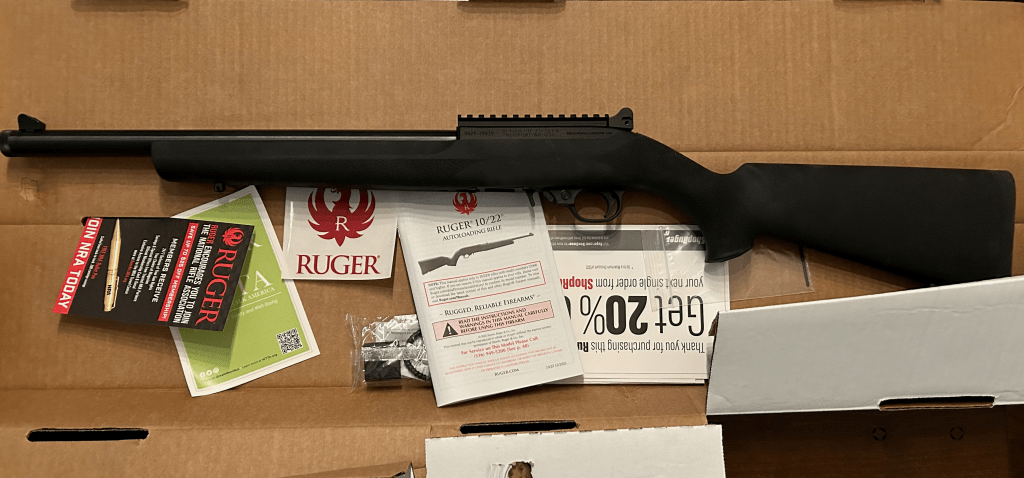
Unboxing and first impressions
Out of the box, the rifle presents differently than earlier “standard” 10/22s. The change is not dramatic in any single dimension, but the aggregate effect is noticeable.
At 4.7 pounds, it remains a light rifle. But the weight is distributed differently. The bull barrel shifts the center of mass forward, which has two immediate consequences: the rifle resists small, unintentional movements more effectively, and it feels less insubstantial in the hands. Earlier 10/22s could feel almost toy-like by comparison. This does not.
Fit and finish are also more consistent. There is no sense of hollow plastic or loosely fitted components. Nothing suggests an unfinished baseline awaiting modification. The rifle feels complete in a way that standard models historically have not.
This aligns with the broader direction of the 2026 refresh. Rather than reimagining the platform, Ruger appears to have identified the most common post-purchase modifications and incorporated them directly. The lighter trigger, heavier barrel profile, integrated rail, and improved sights are not innovations so much as consolidations of long-established user preferences.
The stock
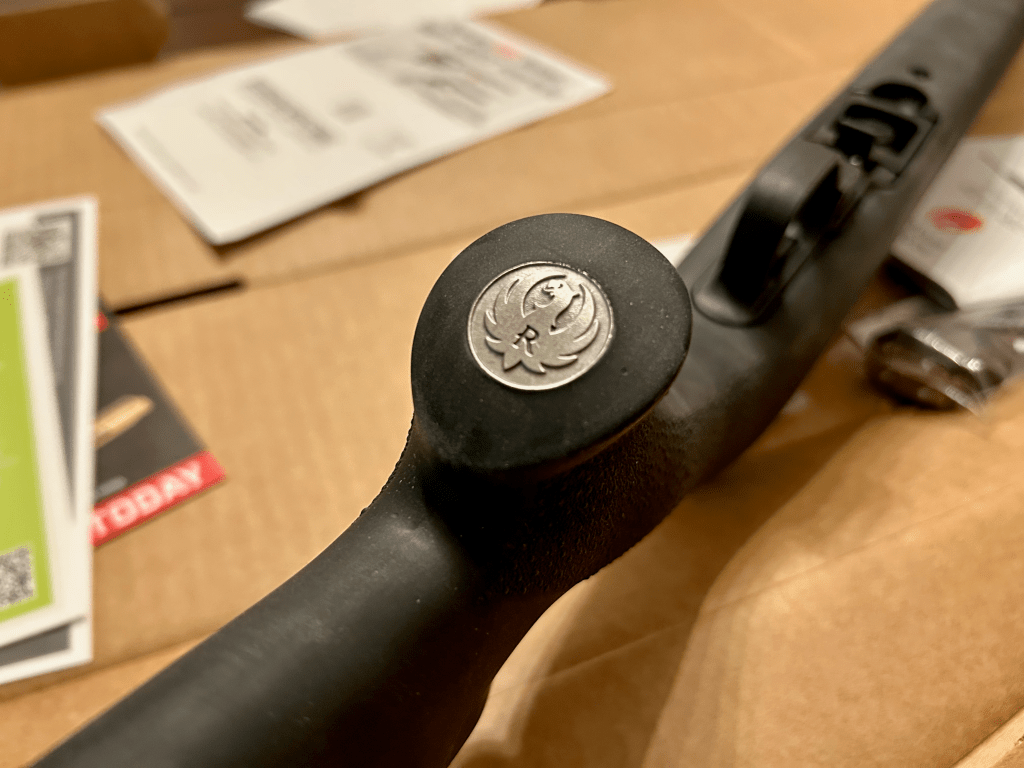
The Hogue OverMolded stock is the most immediately perceptible departure from earlier models. On paper, it is simply a different material and surface treatment. In practice, it changes how the rifle interfaces with the shooter. The outer layer has a slightly compliant, rubberized texture that increases friction without feeling adhesive. The result is a grip that requires less active correction. The rifle settles into the hands rather than needing to be managed.
This is particularly noticeable when compared to traditional hardwood or standard polymer stocks, both of which tend to encourage small, continuous adjustments to maintain consistent control. The 13.75-inch length of pull is unremarkable in the best sense. It neither calls attention to itself nor requires adaptation. It simply works.
The trigger
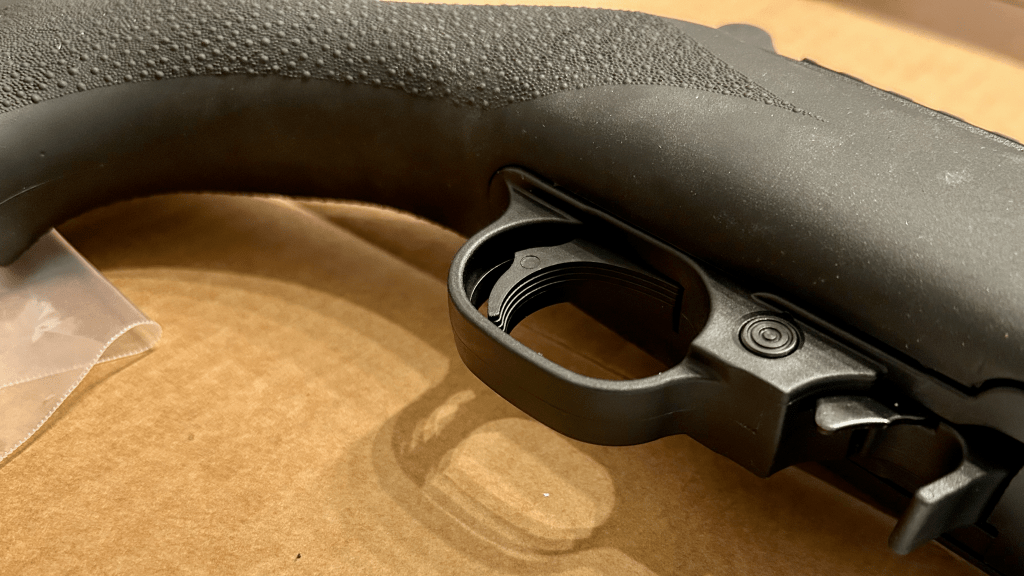
The BX-Trigger is one of the more consequential upgrades, though it is also one of the least visually apparent.
Breaking in the 2.5 to 3 pound range, it is lighter and cleaner than the legacy trigger group. There is a slight hint of initial resistance in this sample, likely to diminish with use or minimal lubrication, but the overall behavior is consistent: a predictable take-up followed by a clean break and a defined reset.
Importantly, it does not feel like a compromise. Previous “standard” triggers often felt like placeholders. This does not. It is sufficient on its own terms, which changes the default assumption from “this will be replaced” to “this can stay.”
The barrel
The barrel is responsible for much of the rifle’s changed character.
The 16.12-inch cold hammer-forged bull barrel introduces additional mass and rigidity compared to traditional tapered profiles. The practical effect is improved stability. When aiming, the rifle settles more quickly and holds position with less effort. Small deviations are dampened rather than amplified.
This does not translate to heaviness. Instead, it produces a more controlled and predictable handling experience. The rifle feels anchored without feeling burdensome.
The satin black finish is uniform and non-reflective, consistent with the rest of the rifle’s understated aesthetic.
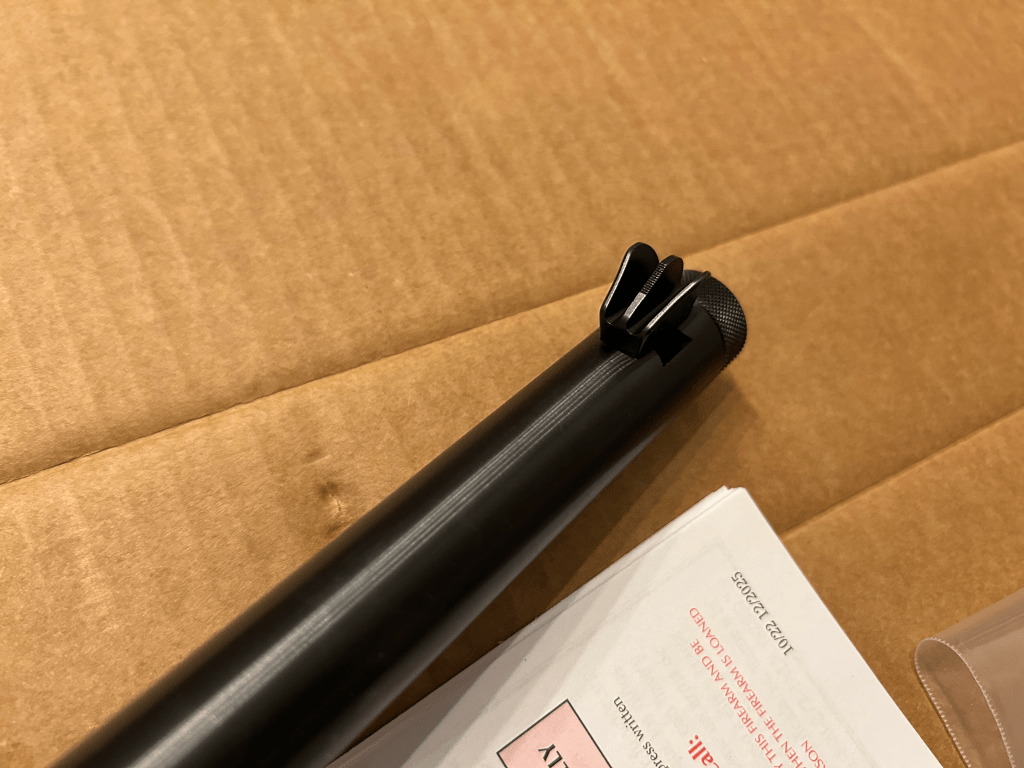
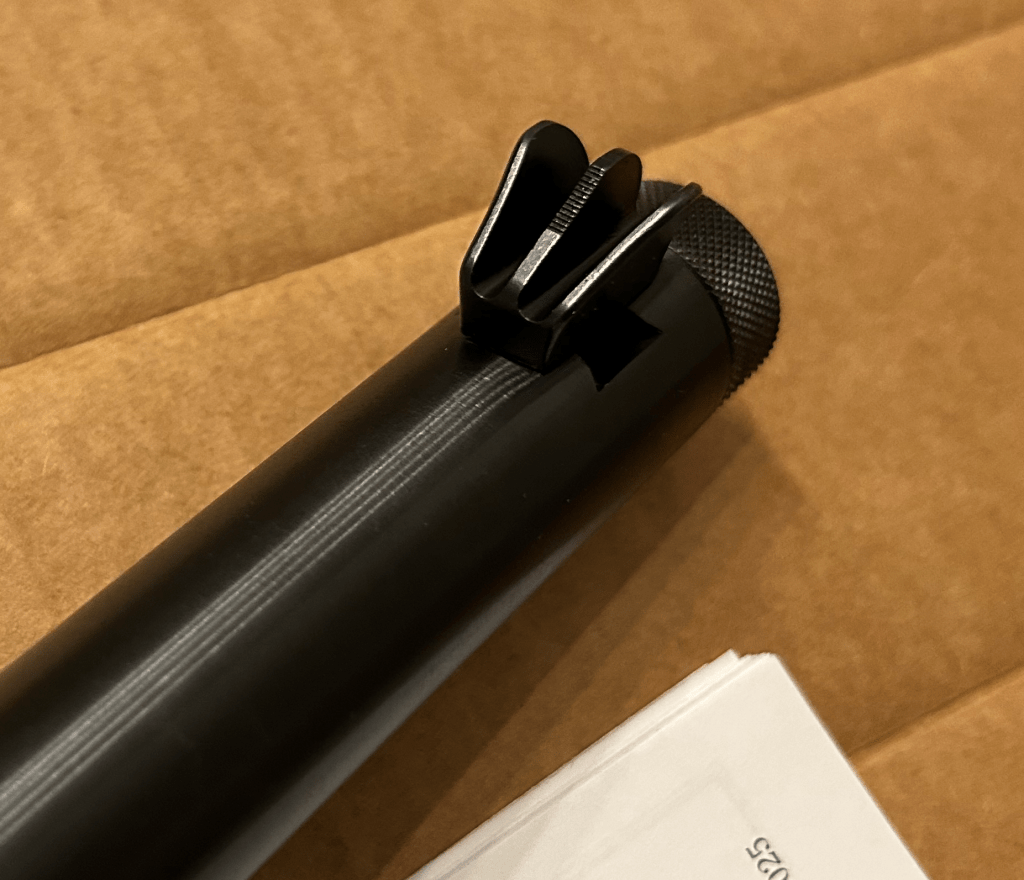
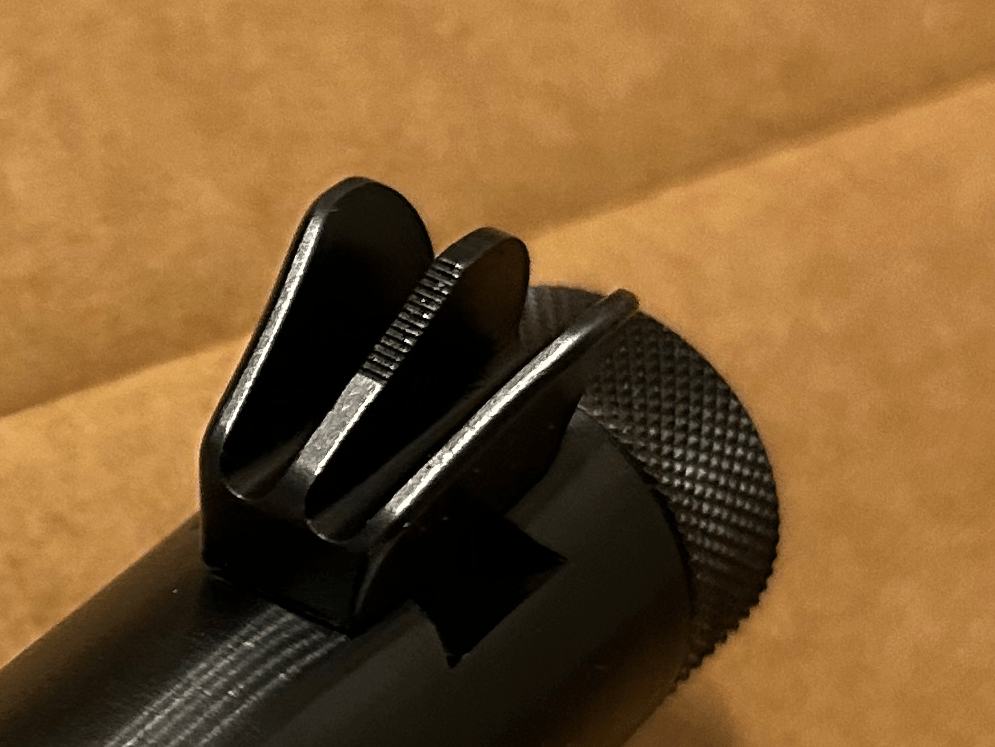
At the muzzle, 1/2×28 threading is protected by a cap. This is a functional inclusion rather than a marketing point. It enables direct use of suppressors or other muzzle devices without modification, reflecting current expectations for rimfire platforms.
Sights and rail
The sighting system represents a subtle but meaningful shift.
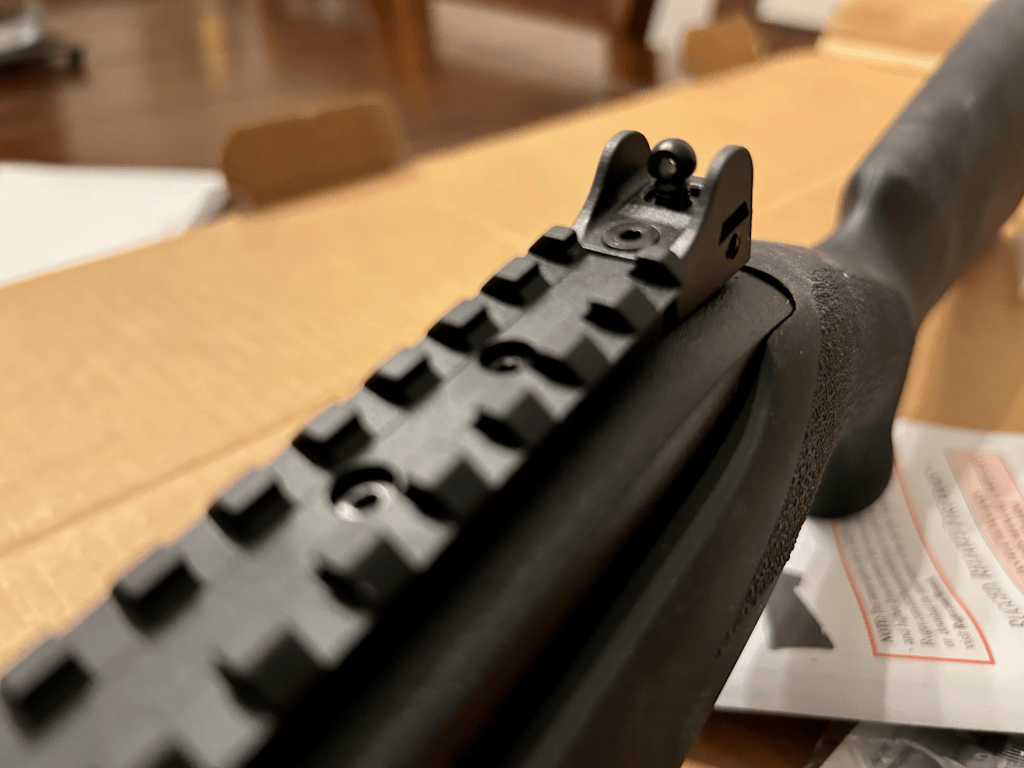
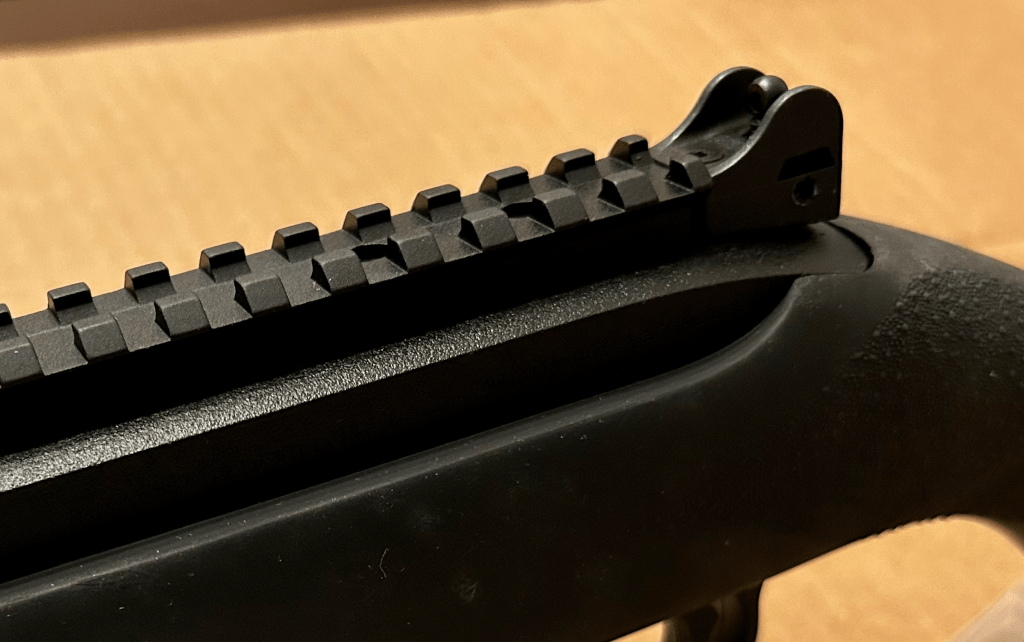
The combination of a ghost ring rear sight and protected front blade is faster and more intuitive than traditional notch-and-post configurations. The eye naturally centers within the aperture, reducing the cognitive overhead required to align the sights.
Above the receiver, a factory-installed Picatinny rail is integrated cleanly. Its presence eliminates a common early modification step. Optics can be mounted immediately, without additional parts or adjustments.
Machining and finish in this area are consistent with the rest of the rifle. There are no visible tool marks, and all interfaces appear properly aligned.
The details you don’t notice at first
Several of the most meaningful changes are not immediately visible.
The rear cleaning port simplifies maintenance by allowing access from the breech end. On earlier models, proper cleaning often required working from the muzzle or partially disassembling the rifle. This change reduces both effort and potential wear on the barrel.
The match bolt release removes a longstanding usability issue. Traditional 10/22s require deliberate manipulation to release the bolt. Here, a simple pull and release achieves the same result. The difference is minor in isolation but significant in repetition.
The rotary magazine system remains unchanged, which is the correct decision. Its internal rotor separates cartridges and ensures consistent feeding. It has been a defining strength of the platform, and there is no indication that it needed revision.
Individually, these updates are incremental. Collectively, they reduce friction across the entire experience.
Living with it
For long-time 10/22 owners, the experience is both familiar and slightly disorienting.
The core mechanics are unchanged. The rifle operates exactly as expected. But the usual impulse to evaluate what should be replaced is diminished. The trigger is acceptable. The barrel is already upgraded. The stock does not require immediate substitution. The rail is already installed.
This removes a layer of decision-making that has historically been part of owning a 10/22.
Final perspective
The Model 32024 is best understood as a convergence point rather than a departure.
For decades, the 10/22 ecosystem has been defined by its aftermarket. The base rifle provided a reliable action and a modular foundation, while performance, ergonomics and user preference were addressed post-purchase. Over time, a fairly consistent “upgrade pattern” emerged: lighter trigger, heavier barrel, improved stock, optics mounting solution, and in some cases, revised sights.
What Ruger has done here is collapse that pattern into the factory configuration.
From a product standpoint, this reduces the gap between baseline and optimized performance. The BX trigger addresses pull weight and break quality within a range that satisfies most users without requiring immediate replacement. The bull barrel increases rigidity, which improves stability and consistency without materially compromising weight. The Hogue stock improves grip interface and control, particularly in less-than-ideal conditions. The integrated Picatinny rail eliminates a common first modification and standardizes optics mounting. The ghost ring sight system shifts the rifle toward faster target acquisition while retaining mechanical simplicity.
None of these elements are novel individually. Their significance lies in their integration.
Just as important is what Ruger chose not to change. The core blowback action remains intact. The rotary magazine system is unchanged. The overall architecture of the rifle is preserved. These decisions maintain compatibility, reliability and familiarity while allowing targeted improvements around the margins.
From a manufacturing perspective, this approach likely reflects both engineering maturity and market feedback. The 10/22 platform has had decades of real-world iteration through user modification. Incorporating those learnings at the factory level simplifies the ownership experience while also capturing value that previously flowed to the aftermarket.
The result is a rifle that shifts the default assumption. Historically, a standard 10/22 was expected to be modified. With the 2026 configuration, modification becomes optional rather than implicit.
That distinction is subtle, but meaningful.
 Michael Castellon