-
This Old Cat


One summer afternoon about 20 years ago, I sat in a stranger’s living room and watched as Lauren sorted through a litter of free kittens. She lifted a small tabby no larger than a tangerine, kissed his head and declared him perfect.
We brought him home to our small apartment and named him Cajun. We were tired graduate students testing our relationship with a first pet.
The three of us grew up together over the next two decades. We experienced a lot –– marriage, new homes, new jobs, new friends, many good times, some bad times.
Cajun’s life was one of leisure. His days were spent napping on sunny patios or beside roaring fireplaces.
His vet called him her handsome man, and once showed us how she could make his heart flutter on an ultrasound by kissing his nose.
And as it goes, time is something there is never enough of. So on a drizzly, unfair January morning, we held Cajun one last time, gave him thanks, and watched as he slipped away to wherever legends go to be missed.
This I know for sure –– we will always miss him.
Special thank you to both the Cat Hospital of Austin and Austin Vet Care for their love of Cajun over the years.
-
Arriving in London
The sun rose over Ireland about two hours before our arrival into London.
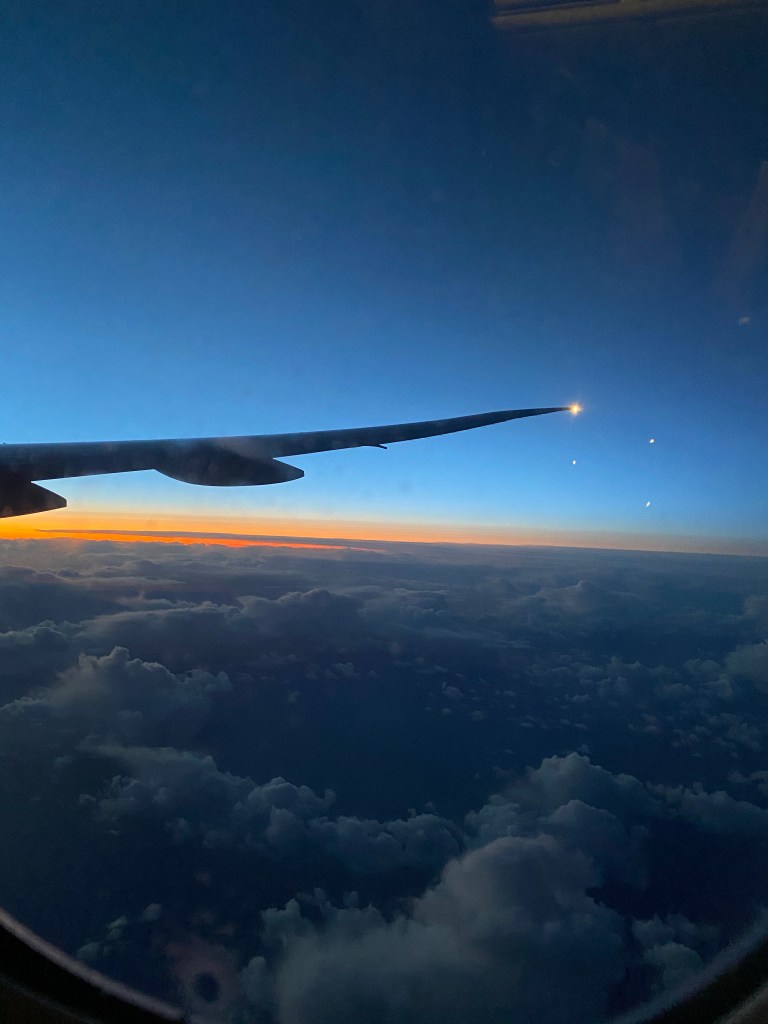
Over Cork, Ireland, 2020 We took a Black Cab from Heathrow Airport to our apartment. Our driver pointed out several landmarks, embassies and gardens before dropping us off in Westminster.
After a short nap, we walked about three miles toward an early dinner at the Indian restaurant a friend had recommended. We walked by Westminster Cathedral, then through Hyde Park as the sun set.
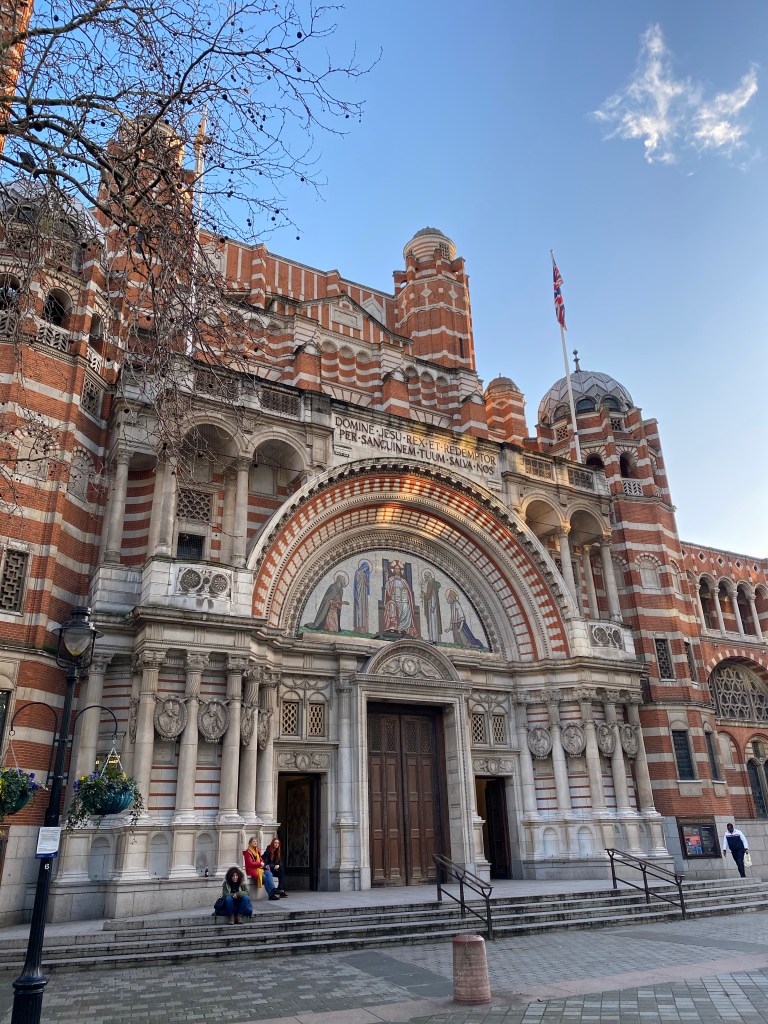
Westminster Cathedral, London, January 2020 
Roti Chai, London, January 2020 
Hyde Park, London, January 2020 
Phone booths, Hyde Park, London, January 2020 -
OpenAirplane Shuts Down
OpenAirplane, the operation that attempted to make renting general aviation aircraft as simple as renting a car, is shutting down. I’ve completed two Universal Checkouts in the OpenAirplane system, but like many pilots, I never exercised the privileges.
I’ve been a follower of Rod Rakic for some time, and I’m sorry to see his endeavor didn’t make it:
General aviation is a bit like teenage sex. Lots of people talk about it, even when few are doing it. Survey data is not anywhere close to being as valuable as being in the market and following real money. Consumers are fickle, and humans are terrible at estimating utilization. Long before we launched OpenAirplane, we surveyed thousands of pilots. They told us they would fly an average of 10 hours a year more than they do today. That did not come to pass. Demonstrating to us at least that surveys are a terrible way to capture intent. While the idea of OpenAirplane won us praise, fans, and even super fans, the reality is that too few pilots took to the skies to make the operation sustainable.
If there’s one thing that we learned the hard way, it is that it’s tough to get pilots off the couch and into the cockpit.
To add to that, it’s getting harder to justify $!50+ per rental hour to fly. The GA industry needs to allow for innovation if it’s going to survive.
-
A Little More Than a Year Ago I Went Home
YouTube recently reminded me that it’s been about a year since Lauren and I returned to Champaign-Urbana and took a 172 out over the city. We visited one of my favorite teachers, and also had dinner with the parents of one of my very best friends from childhood. We walked the rows of apple trees at Curtis Orchard and watched the staff at Prairie Gardens begin to unpack Christmas decorations.
Via Aerial Tour of Champaign-Urbana from Frasca Field – Michael Castellon – YouTube
-
WWII Air Combat Techniques
The American Volunteer Groups –– or Flying Tigers –– were volunteer air combat units organized by the United States government to assist China against Japan in the Second Sino-Japanese War.
Erik Shilling, a former Flying Tiger, describes the air combat techniques required to engage with Japanese fighter aircraft:
We used to listen to Tokyo Rose quite frequently. On several of her broadcasts, she called the Flying Tigers cowards because we refused to stay and fight, then challenged us to stop running away. We thought this was quite humurous, and at the same time, knew our tactics were hurting.
Also on some of Tokyo Rose’s broadcasts, the number of AVG aircraft that the Japanese claimed to have shot down, was the exact number Japaese aircraft that we had destroyed. (We only lost 4 pilots in aerial combat.) This was the figure I used in giving our kill ratios. It had no bearing on the number of aircraft we or they destroy. Even [Daniel] Ford has said that we killed approximately 400 air crew.
To show a couple examples of attacking enemy fighters: If you attack head on, which the enemy was reluctant to do, because our guns outranged the fighters, they would normally pull up. (If he started turning away, he would already be at a disadvantage.) You started firing at Max range, and then dive away, under these conditions we didn’t turn and tangle with a Jap fighters.
Attacking the enemy from a 3 to 6 o’clock position.
Why roll rate was important, is that one must remember that all maneuvers, except for a loop, started with a roll. The slower the roll rate the longer it took before the turn began.
1. If he turned away, he set you up on his six. A most undesirable position for him, because he would be a dead duck.
2. The enemy invariably turned toward you which was normal and anticipated. With his slower roll rate, you could beat him into the turn, get a deflection shot at him, and when you slowed down to where he started gaining on you in the circle, you rolled and dove away before you were in his sights. If you haven’t tried it don’t knock it.